
When Censorship Becomes Normal
What the Latest Reports and H.R. 7661 Reveal About the Future of Schools, Libraries, and Public Education

A few years ago, book challenges were often framed as isolated local disputes.
A parent objected to a title. A district reviewed it. The process moved slowly and publicly.
That is no longer what is happening.
The latest reports from PEN America and the American Library Association show something much larger. Book bans are becoming organized, normalized, and increasingly political. And now, efforts like H.R. 7661, which I wrote about here yesterday, threaten to shift that pressure from local campaigns into federal policy.
This is no longer just a conversation about individual books.
It is a conversation about who controls access to information in schools, whose stories are considered acceptable, and whether intellectual freedom will remain a core value in public education.
For years, many educators and librarians warned that censorship efforts would not remain isolated to a handful of districts or viral school board meetings. The newest data suggests those warnings were not exaggerated.
The infrastructure around censorship has changed.
What the PEN America Report Actually Says
PEN America’s latest report documents the continued escalation of book bans across the United States.
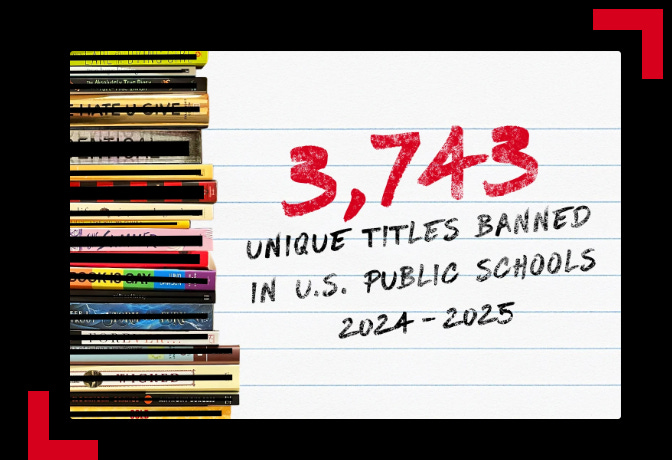
According to the organization, there were 6,870 documented book bans during the 2024-2025 school year across 23 states and 87 school districts. Nearly 4,000 unique titles were affected. Since 2021, PEN America has documented more than 22,800 book bans nationwide.
But the most important finding in the report is not simply the numbers.
It is the normalization.
Schools are increasingly responding to political pressure before formal complaints are even filed. Librarians report fear, exhaustion, harassment, and growing pressure to avoid controversy. In some districts, books are removed preemptively. In others, educators narrow classroom collections quietly to avoid becoming targets.
The most effective censorship is often invisible.
It happens before a formal challenge ever appears in public.
I Know This Fight Personally
In 2022, I lost my position after creating diverse book displays in my school library.
At the time, many people treated incidents like that as isolated controversies. Looking back now, it is clear they were early signs of a much larger national shift around censorship, political pressure, and access to information.
Since then, book bans have expanded nationally. Organized pressure campaigns have intensified. State legislation has increased. And efforts like H.R. 7661 suggest that what once operated locally is increasingly moving into federal policy conversations.
That experience shaped how I think about intellectual freedom, professional risk, and the growing pressure educators face when access to diverse stories becomes politicized.
What Changed?
Ten years ago, most reconsideration processes were slow, localized, and relatively rare.
Today, a single social media post can trigger national outrage campaigns within hours.
Political organizations distribute challenge templates online. Activist networks coordinate messaging across states. School board disputes become national content ecosystems amplified through podcasts, YouTube channels, Facebook groups, and political fundraising campaigns.
Censorship today is faster, louder, and more coordinated than previous eras.
At the same time, many districts operate under enormous political and financial pressure. Administrators know a single controversy can dominate local headlines, create legal threats, or trigger organized harassment campaigns.
As a result, some schools are no longer waiting for challenges.
They are removing first and reviewing later.
The Top Challenged Books Tell a Story
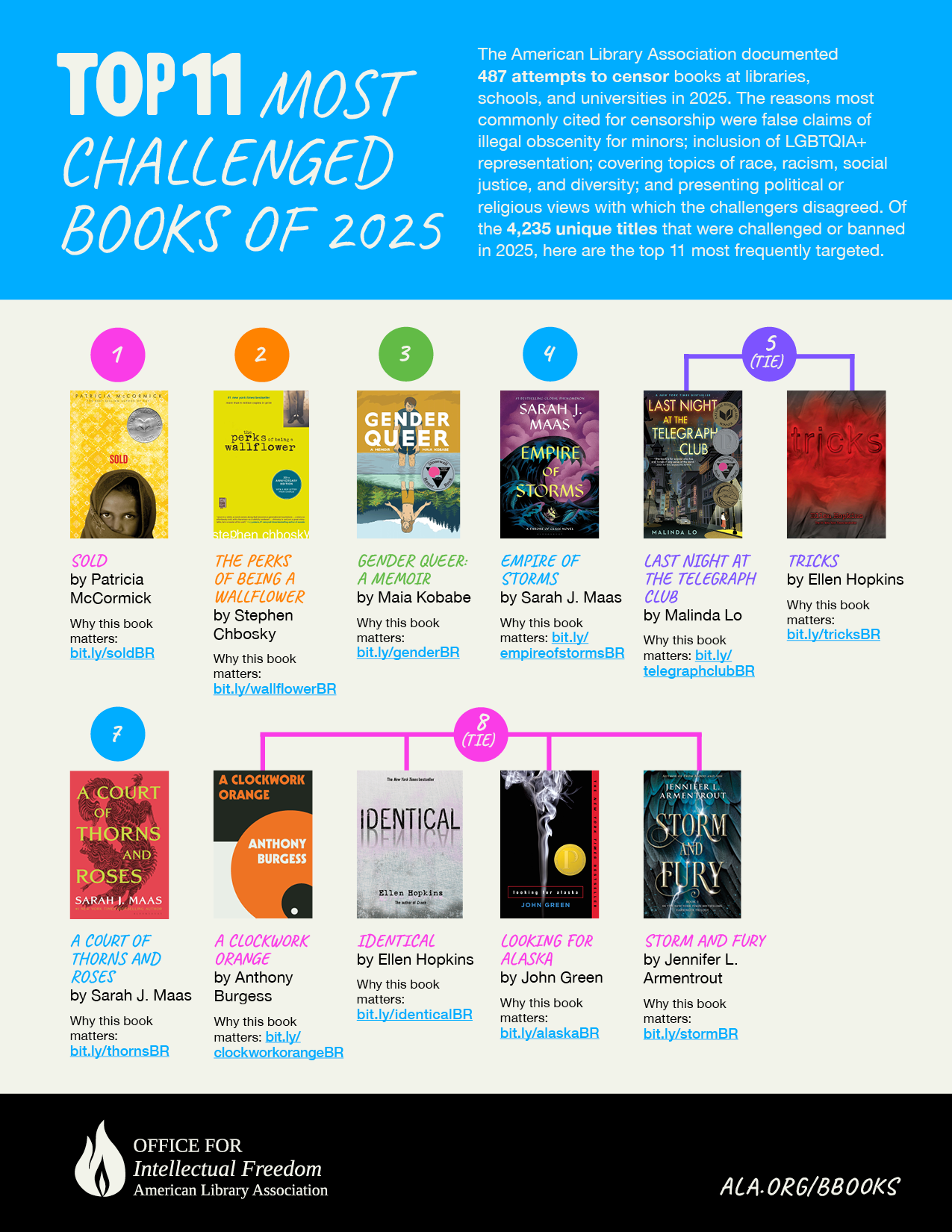
The ALA’s Top 10 Most Challenged Books list reveals a clear pattern.
Many of the most targeted titles focus on LGBTQ+ identity, race, trauma, abuse, mental health, or marginalized experiences. Frequently challenged books include titles such as:
Gender Queer
All Boys Aren’t Blue
The Bluest Eye
Sold
The Perks of Being a Wallflower
These books are often publicly framed as disputes about “explicit content.”
But the broader pattern tells a more complicated story.
Books about sexual violence are challenged for sexual content. Books about LGBTQ+ identity are framed as inappropriate. Books addressing racism or systemic inequality are labeled divisive.
According to ALA data, a significant percentage of challenged books involve LGBTQ+ themes or authors and stories centered on people of color.
The targeting patterns are difficult to ignore.
The Myth of “Concerned Parents”
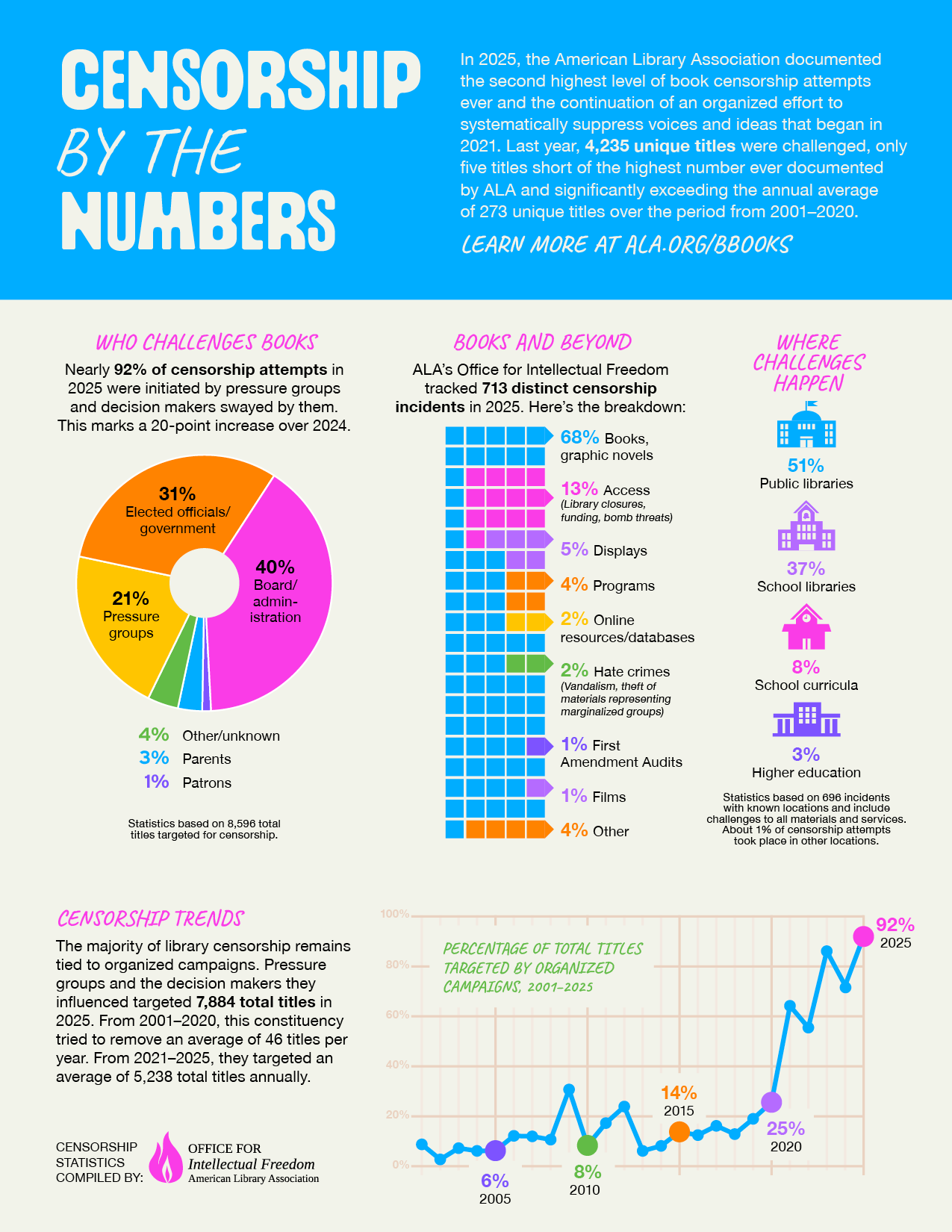
One of the most revealing findings in recent censorship data is who is actually driving many of these challenges.
According to ALA reporting, the overwhelming majority of organized book challenges now come from pressure groups, political organizations, elected officials, or coordinated campaigns rather than individual parents acting independently.
That does not mean parents should not have concerns or ask questions about school materials. Schools already have review systems and reconsideration policies for exactly that reason.
But the current landscape increasingly reflects organized political activism rather than isolated community concerns.
That distinction matters.
Because organized campaigns create pressure far beyond individual complaints. They generate fear, encourage anticipatory censorship, and reshape decision-making long before a public challenge occurs.
From Local Challenges to Federal Policy
This is where H.R. 7661 becomes important.
For years, book bans were often framed as local disputes between parents and school districts.
H.R. 7661 represents something different.
The bill attempts to move censorship from localized pressure campaigns into federal education policy by tying federal funding to broad restrictions on materials deemed “sexually oriented.” The language within the bill specifically references materials involving “gender dysphoria or transgenderism.”
The danger is not only what the bill explicitly targets.
It is the chilling effect it creates.
When funding is threatened, schools do not wait for legal clarity. They over-correct. They remove materials preemptively. They narrow collections to avoid political risk.
The bill mirrors many of the same targeting patterns reflected in the ALA’s most challenged books data.
That connection matters.
Because it demonstrates how local censorship efforts can evolve into broader policy frameworks with national implications.
Students Are Watching
Students notice which stories adults are afraid of.
They notice which identities create controversy.
They notice which histories are treated as dangerous.
Even when books remain technically available somewhere else, the public act of restricting them sends a message.
For some students, that message is that their experiences are controversial. For others, it teaches that avoiding difficult conversations matters more than understanding them.
That lesson carries consequences far beyond the library.
Who Gets Hurt First?
Students who rely most heavily on school libraries are often the first to lose access.
That includes:
LGBTQ+ students
students of color
students navigating trauma
students seeking representation
students without access to books at home
students whose communities are already underrepresented in curriculum
When access narrows, the impact is not evenly distributed.
Students with financial privilege may still access books elsewhere. Students with strong support systems may still find representation online or through private networks.
Many students cannot.
For some young people, the school library is the only place where they encounter stories that reflect their identities, histories, or experiences.
When those stories disappear, students lose more than books.
They lose visibility.
This Is About More Than Books
Defending intellectual freedom does not mean every book belongs in every grade level or instructional setting.
Schools already have professional selection policies, review procedures, and reconsideration systems.
The concern raised by these reports is not the existence of review systems.
It is the growing replacement of professional processes with political pressure and anticipatory censorship.
Public debate matters.
But expertise also matters.
Librarians, educators, and professional review systems exist because thoughtful collection development requires context, standards, and educational judgment, not viral outrage cycles.
This also extends far beyond reading lists.
It affects:
information literacy
civic education
historical understanding
media literacy
research skills
student inquiry
academic freedom
At the same moment educators are trying to prepare students for an AI-driven information ecosystem filled with misinformation, deepfakes, manipulated media, and algorithmic bias, many schools are restricting access to professionally selected books and library materials.
Those trends cannot be separated.
Critical thinking requires exposure to complexity.
Students do not learn how to evaluate ideas by only encountering information that feels politically safe or universally comfortable.
The Invisible Impact: Self-Censorship
The most alarming effect of censorship may not be the public bans themselves.
It may be the silence that follows.
Librarians quietly stop ordering certain books. Teachers remove titles from classroom shelves. Publishers hesitate. Authors self-edit. Districts narrow collections before complaints are even filed.
This form of censorship rarely appears in official statistics.
But it reshapes education all the same.
Part of the danger of normalization is exhaustion.
Over time, repeated controversy can make even committed educators feel that resistance is impossible or no longer worth the personal cost.
And once self-censorship becomes normalized, rebuilding intellectual freedom becomes much harder.
What Happens Next?
The next phase of censorship debates may not focus only on physical books.
Increasingly, these efforts may target:
digital collections
research databases
ebook platforms
classroom resource systems
AI-generated content
educational technology platforms
access itself
This matters because students now encounter information across interconnected systems, not just physical shelves.
The future of intellectual freedom will not only be decided by what remains in libraries.
It will also be shaped by what students are allowed to search, access, view, and question in digital environments.
History Offers a Warning
History shows that censorship movements rarely stop with one category of books.
Once systems are built to restrict access to information, the scope often expands.
The United States has seen previous waves targeting:
civil rights literature
LGBTQ+ materials
anti-war writing
feminist texts
books discussing racism and inequality
Each era justified restrictions differently.
But the underlying pattern remains familiar.
Control access to information. Define which stories are acceptable. Narrow what students are allowed to encounter.
What Educators and Librarians Can Do Right Now
This moment requires more than quiet concern.
It requires public engagement.
Some practical steps include:
contacting legislators about censorship-related bills
attending school board meetings
understanding local reconsideration policies
supporting organizations like EveryLibrary, PEN America, and Unite Against Book Bans
documenting removals and restrictions
supporting librarians and teachers facing harassment
reading challenged books directly rather than relying on social media summaries
speaking publicly about intellectual freedom and access
Neutrality becomes difficult when access to information itself is under attack.
Final Thoughts
Four years ago, many people believed these conflicts were temporary controversies.
The latest data suggests otherwise.
The question is no longer whether book bans exist.
The question is whether we are willing to accept censorship as a normal part of education.
Intellectual freedom is not about agreement.
It is about preserving the ability to encounter ideas, perspectives, and experiences that challenge us.
Because once restricted access to information becomes routine, rebuilding a culture of intellectual freedom becomes far harder than protecting it in the first place.
And at a moment when students are already navigating one of the most unstable information environments in modern history, weakening access to professionally selected books and library resources moves schools in exactly the wrong direction.